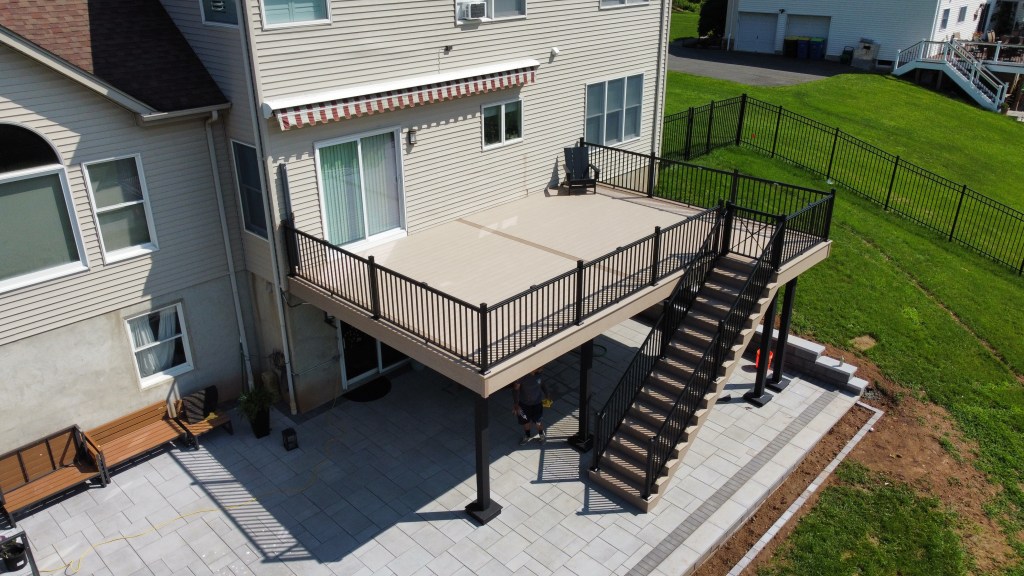
Planning a new deck starts with an exciting question: what could this backyard become? It is usually followed by a practical one: how much will the deck cost?
There is no single price that fits every New Jersey deck. The final investment depends on the size, materials, site conditions, structural requirements and finishing details you select. Understanding those factors makes it easier to set a realistic budget and compare proposals fairly.
1. Deck Size and Layout
Square footage is one of the biggest cost factors, but the shape matters too. A straightforward rectangular deck generally requires less labor and fewer specialty cuts than a multi-level design with angled sections, built-in seating or multiple staircases.
The best layout is not always the largest one. A well-planned deck should comfortably fit the way you expect to use it—such as grilling, dining, relaxing or entertaining—without paying for space that serves no purpose.
2. Decking Material
The decking surface influences the initial price, appearance and long-term maintenance. Pressure-treated wood can offer a lower upfront cost, but it typically needs periodic cleaning, staining and sealing. Composite and PVC decking cost more initially, yet many homeowners choose them for their resistance to moisture, fading, staining and everyday wear.
Premium collections may include more realistic wood-grain patterns, enhanced color variation, longer warranties and cooler or more slip-resistant surfaces. We help homeowners compare options based on the full ownership experience—not just the price of the boards.
3. Existing Structure and Site Conditions
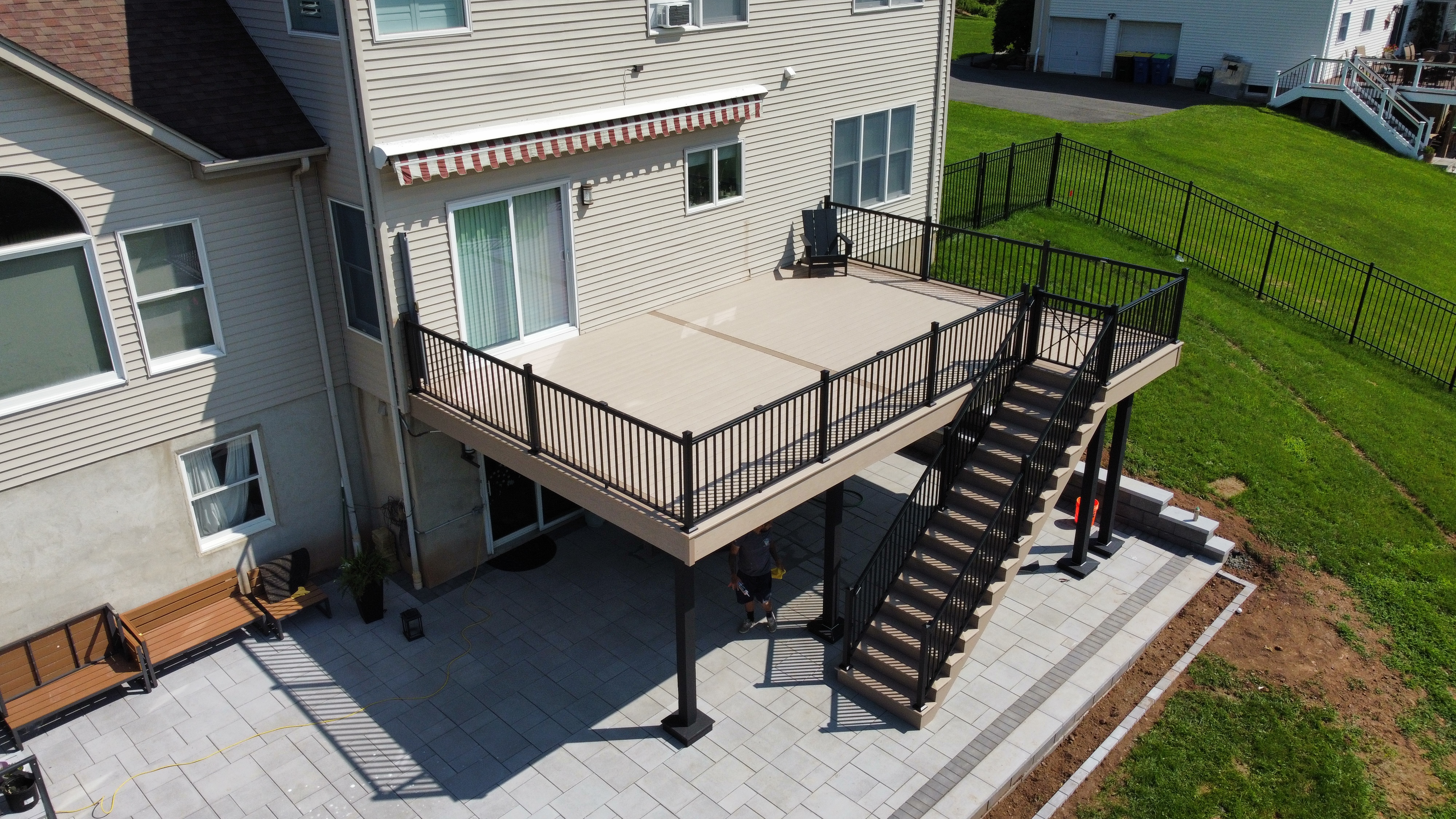
Every property is different. Soil conditions, grading, drainage, access for materials and the distance from the house can all affect construction. An elevated deck may require taller posts, additional bracing and more complex footings than a low platform deck.
If an old deck already exists, it must be inspected before anyone assumes the framing can be reused. Resurfacing may be possible when the structure is sound and code-compliant. If framing has rot, improper connections or undersized components, replacement is the safer long-term choice.
4. Railings, Stairs and Safety Details
Railings can represent a meaningful part of the project budget. Options include composite, vinyl, aluminum and cable railing systems. The number of posts, corners, gates and stair sections affects both materials and installation time.
Stairs also require careful planning. A wide staircase creates an inviting connection to the yard, while extra landings or changes in direction add structure and labor. These elements must be designed for safety and local code compliance from the beginning.
5. Lighting and Custom Features
Integrated lighting makes a deck safer after sunset and creates a finished look. Common choices include stair-riser lights, post-cap lights and accent lighting. Other upgrades—such as a pergola, privacy screen, drink rail, picture-frame border or built-in bench—can turn a basic platform into a complete outdoor living space.
It is usually more efficient to plan these features before construction than to add them later. Wiring paths, blocking and structural support can then be included in the original build.
6. Permits, Plans and Code Requirements
New Jersey municipalities have their own permit and inspection processes. Depending on the project, plans may need to show the deck size, setbacks, footings, framing, connections, railings and stairs. Permit fees and design requirements should be discussed clearly before work begins.
A detailed proposal should explain what is included so you are not comparing one complete project price with another estimate that leaves important items out.
How to Get an Accurate Deck Estimate
The most useful estimate comes after a contractor understands your property and goals. Before requesting one, consider:
- How many people will normally use the deck
- Whether you need separate dining and seating areas
- Your preferred decking and railing materials
- How much maintenance you are comfortable doing
- Features you want now and features you may add later
Photos and measurements are helpful for an initial conversation, but an on-site evaluation allows the contractor to identify access, grading and structural conditions that may affect the scope.
Frequently Asked Questions
Is composite or PVC decking worth the additional cost?
For homeowners who value low maintenance and long-term durability, it often is. The right choice depends on your budget, desired appearance, sun exposure and how long you expect to own the home.
Can I save money by keeping my existing deck framing?
Possibly, but only when the framing is structurally sound, properly sized and suitable for the new decking system. A professional inspection should come before any resurfacing decision.
When should I start planning a new deck?
Start before your ideal construction season. Design decisions, material availability, permits and scheduling all take time. Early planning also gives you more opportunity to compare options without rushing.
Plan Your New Jersey Deck with Prime Decks
Prime Decks builds custom decks, railings and outdoor living spaces throughout Central New Jersey. Explore our deck services, see our latest projects, or request a free estimate to discuss your backyard.
 Prime Decks
Leave a comment